
EOT Cranes & Hoists for Galvanizing
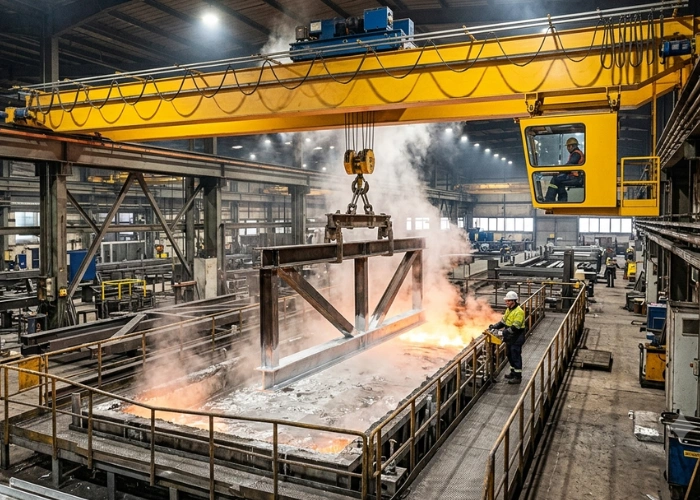
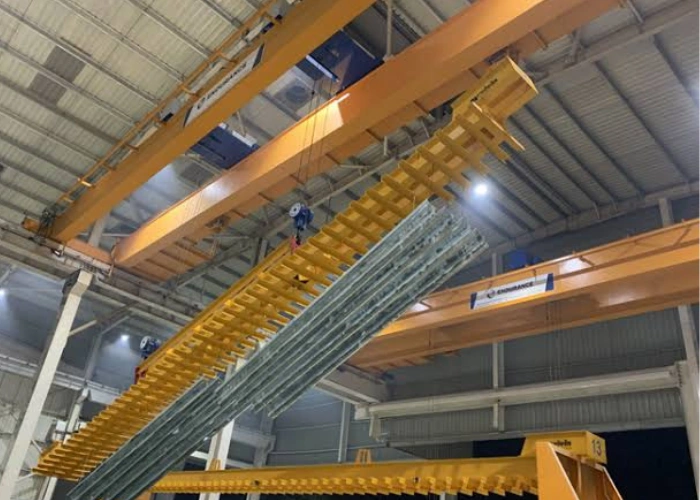
Moving components through a galvanizing line from pre-treatment tanks to the kettle to quenching involves lifting heavy, often awkwardly shaped loads repeatedly throughout a shift. EOT (Electric Overhead Traveling) cranes and hoists handle this movement, lifting and transferring loads across the plant floor without requiring floor-level equipment that would otherwise compete for space with tanks and kettles. For structural steel and general galvanizing especially, crane capacity and reach directly determine what size components a plant can actually process.
Key Features & Specifications
- Load capacity sized to your heaviest and largest components
- Span and reach configured to cover the full pre-treatment-to-kettle sequence
- Hoist speed control for precise positioning during dipping and tank transfers
- Manual, semi-automatic, or fully automatic operation modes
- Safety features including overload protection and limit switches
- Construction suited to the corrosive, high-heat plant environment
How It Works in the Galvanizing Line
An EOT crane typically handles the full journey of a load picking it up after fabrication, moving it through each pre-treatment tank in sequence, lowering it into the kettle for dipping, and then transferring it to quench and passivation. Crane speed and positioning accuracy matter more than people expect here, since dip timing in the kettle needs to be consistent, and how smoothly the crane transitions between stages affects overall cycle time for the whole plant, not just the crane’s own operation.
Why Work With Us on Crane & Hoist Systems
Crane capacity and span need to match your actual component range, not just your average load a crane sized for typical components will struggle the moment an oversized or unusually heavy piece comes through. We size crane capacity, span, and hoist speed around the full range of what you’re actually processing, including the occasional outlier loads, so the crane isn’t the bottleneck that limits what your plant can take on.
Where This Applies
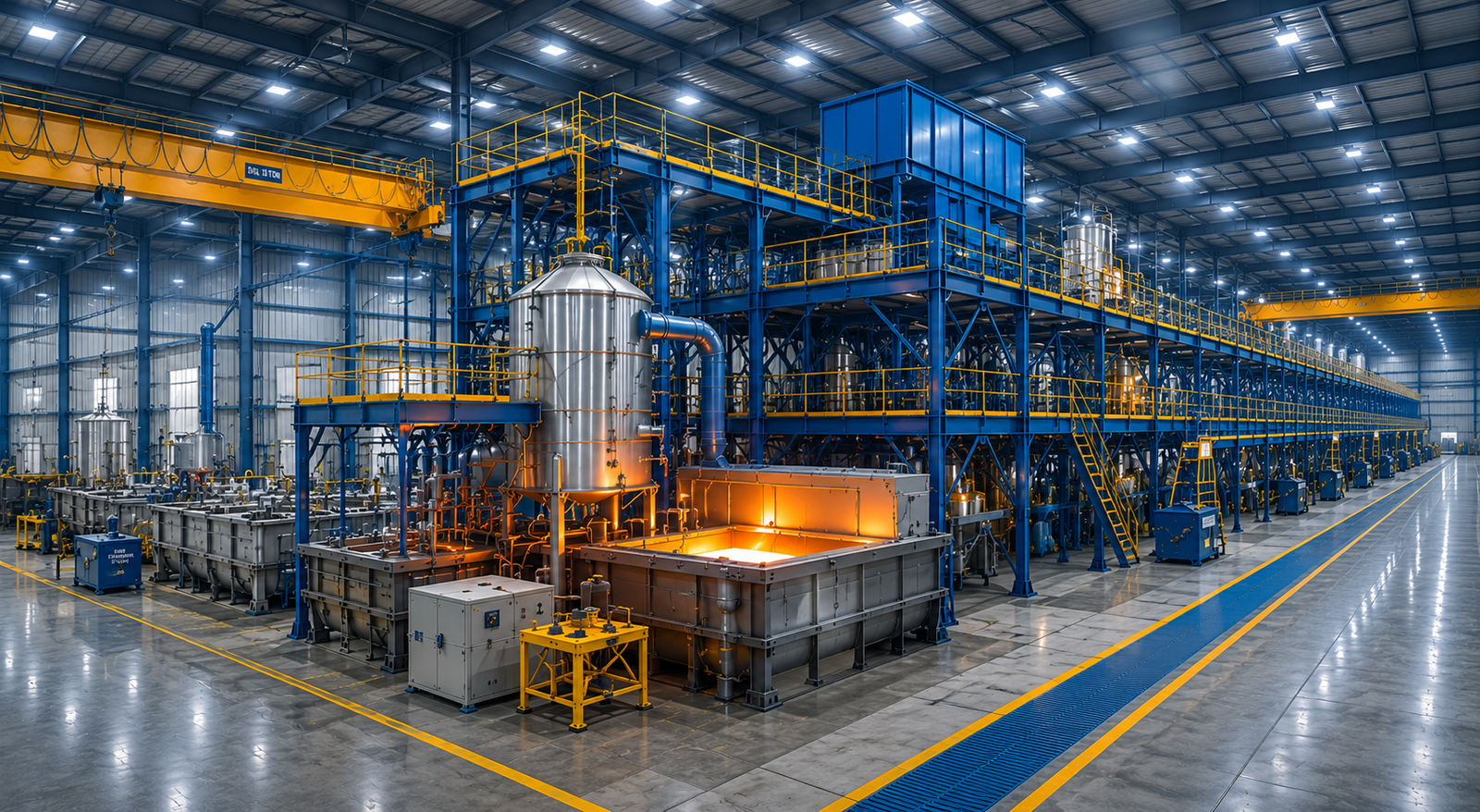
EOT cranes are especially central to general galvanizing and tube/pipe systems, where components are large enough to need overhead lifting rather than basket loading. Spin galvanizing plants typically rely less on overhead cranes and more on basket-handling equipment, though cranes may still be used for moving baskets or auxiliary materials.
Sizing and Customization
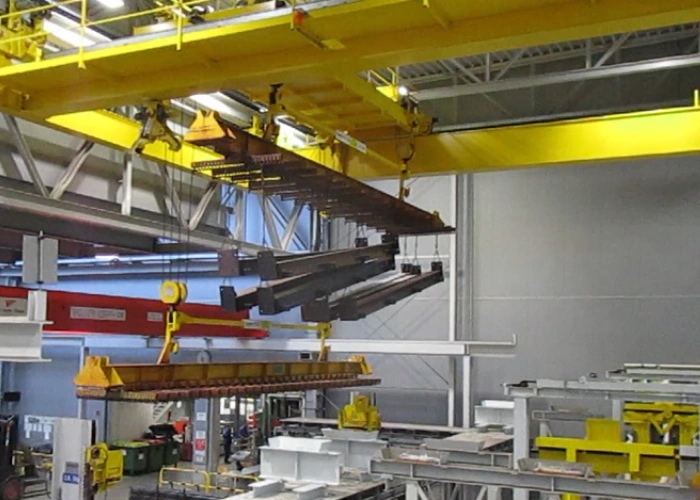
Crane capacity, span, hoist speed, and automation level are chosen based on your component size range, plant layout, and how many lifting cycles you’re running per shift. Fully automatic crane systems can also be integrated with supervisory control for coordinated timing across the whole line.
Related Products
Galvanizing Plant Automation
Zinc Kettle
Jig Lowering & Lifters
Talk to Us About Your Crane Requirements
If you’re specifying crane capacity for a new plant or your current crane setup is limiting production speed, get in touch and we’ll assess your component range and plant layout.
Frequently Asked Questioned!
How is crane capacity determined for a galvanizing plant?
Capacity is based on your heaviest and largest components, with some margin built in for occasional oversized loads that fall outside your typical production range.
What's the difference between manual and automatic crane operation?
Manual cranes require an operator to control every movement, while automatic systems run on programmed sequences with minimal manual input, often integrated with supervisory control for coordinated timing.
Do EOT cranes need special construction for a galvanizing plant environment?
Yes. Cranes operating near acid fumes and high heat need components and finishes suited to that corrosive environment, rather than standard industrial crane specifications.
Can crane speed affect coating quality?
Indirectly, yes. Consistent, controlled dip and withdrawal speed during kettle transfer helps maintain even coating thickness, whereas inconsistent manual handling can introduce variation.