
Flux Heating & Regeneration System
Flux does one specific job it prepares the metal surface right before dipping, preventing oxidation in the brief gap between pre-treatment and the kettle. But flux solution degrades with use, picking up iron salts and impurities as components pass through it repeatedly. A flux heating and regeneration system keeps flux at the right operating temperature for consistent performance, while also recovering and cleaning up used flux so it can be reused instead of discarded after every batch.
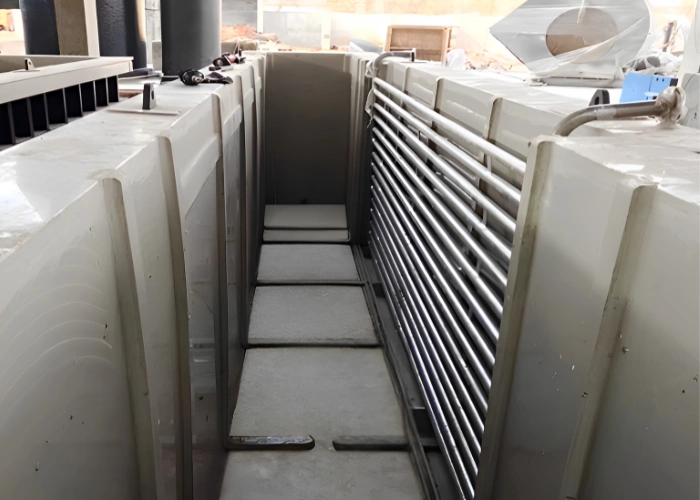
Key Features & Specifications
- Heating element or system to maintain flux at optimal working temperature
- Regeneration unit to filter out iron salts and contaminants from used flux
- Temperature control to keep flux within the range needed for proper surface preparation
- Storage integration with flux tanks in the pre-treatment line
- Filtration system sized for flux volume and contamination rate
- Compatible with both standard and ammonium-based flux formulations
How It Works in the Galvanizing Line
Flux sits in the pre-treatment sequence right before components move to the kettle, and it needs to be at a consistent temperature to work properly too cold, and it doesn’t coat the surface evenly; heated correctly, it forms a reliable protective layer. As components pass through repeatedly, flux picks up iron salts washed off the metal surface during pickling, which gradually reduces its effectiveness. The regeneration system pulls this used flux, filters out the contamination, and returns clean, usable flux back into the tank rather than requiring a full solution replacement every time quality starts to drop.
Why Work With Us on Flux Heating & Regeneration
Flux quality has a direct, visible effect on coating consistency, but it’s one of those things that’s easy to under-invest in since the tank itself looks fine even as the solution degrades. We size heating capacity and regeneration throughput around your actual flux volume and how frequently components pass through it, so flux performance stays consistent shift after shift instead of quietly declining until someone notices coating quality slipping.
Where This Applies
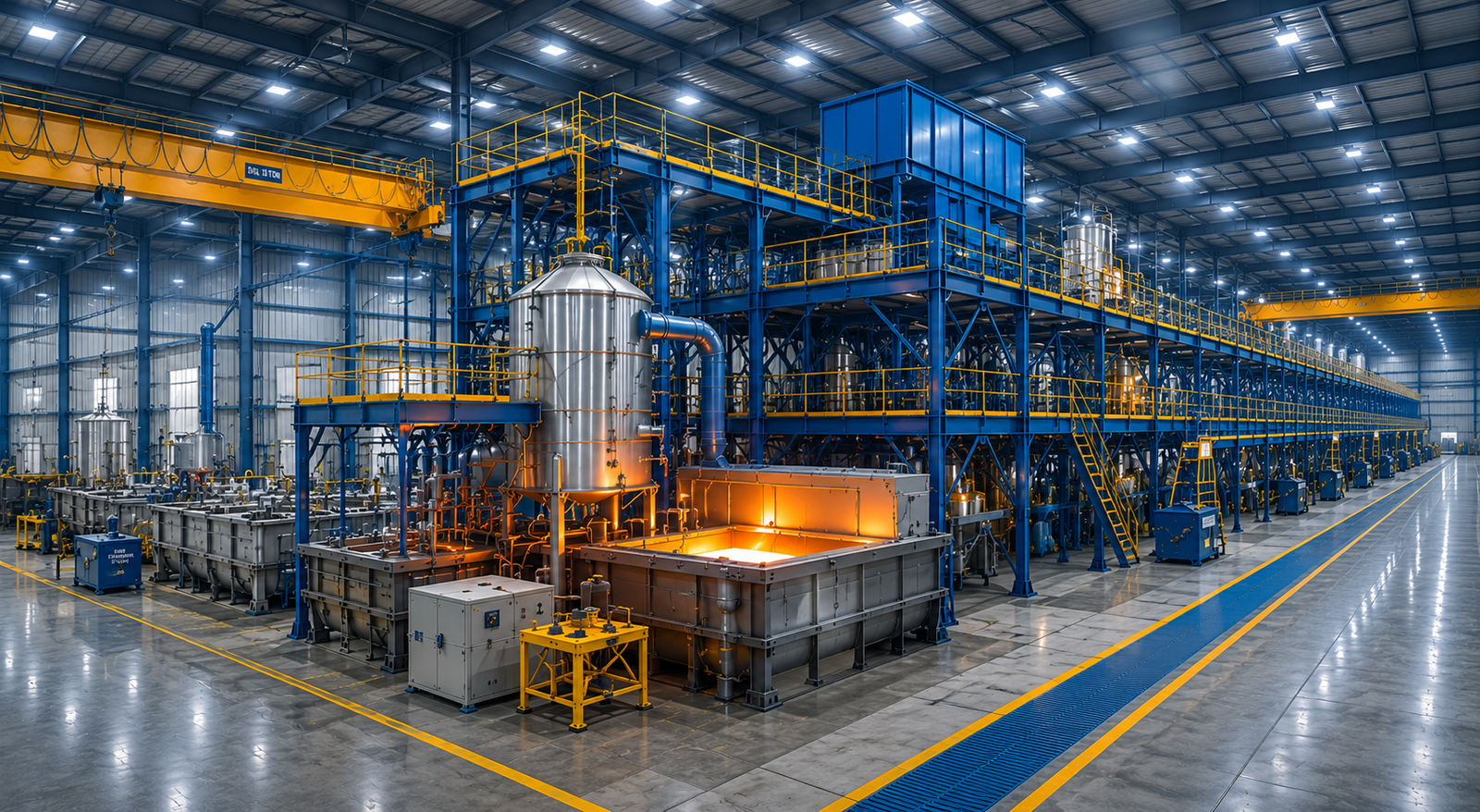
Flux heating and regeneration is relevant across every plant type that uses a fluxing stage general, tube and pipe, and spin galvanizing all rely on flux before dipping, though volume and regeneration frequency vary based on production scale and how contaminated incoming material tends to be.
Sizing and Customization
Heating capacity, regeneration throughput, and filtration specifications are chosen based on your flux tank volume, production speed, and the condition of incoming components heavily rusted stock introduces more iron salts into the flux faster than cleaner material. Systems can also be configured for either standard or ammonium-based flux depending on your process requirements.
Related Products
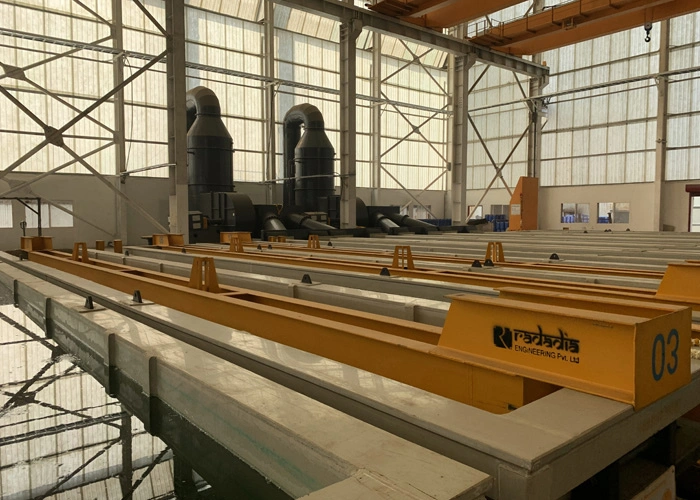
Pre-Treatment Tanks
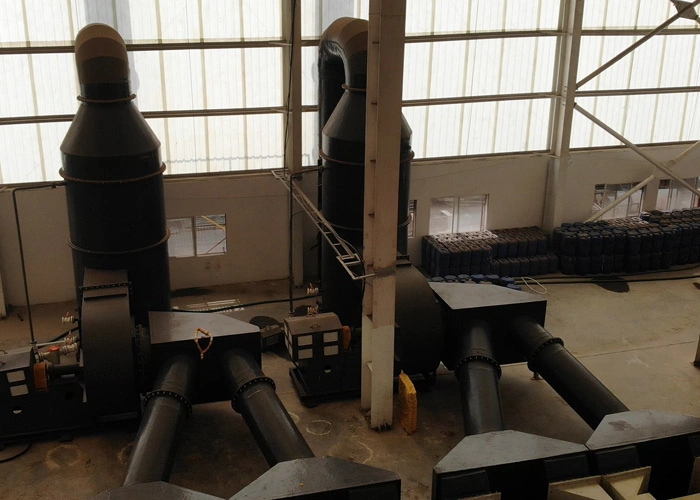
Fume & Environmental Systems
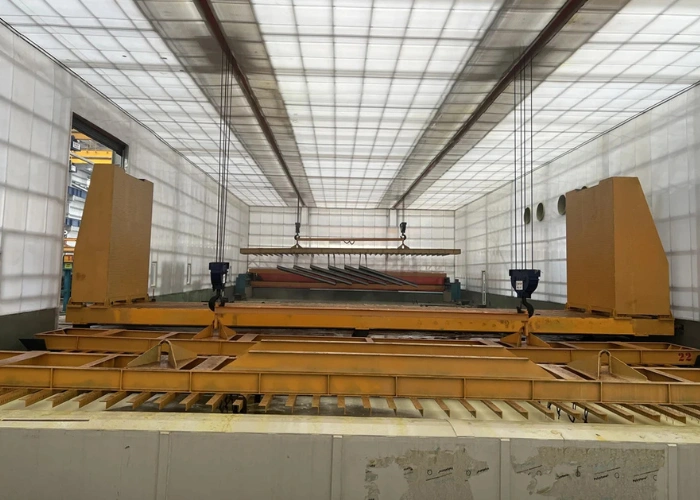
Encapsulated Pre-Treatment Room
Talk to Us About Your Flux System Requirements
If you’re setting up flux handling for a new plant or dealing with inconsistent coating quality tied to flux performance, get in touch and we’ll assess your current flux volume and contamination rate.
Frequently Asked Questioned!
How do I know if flux needs regeneration rather than just topping up?
If coating quality starts becoming inconsistent despite proper dipping technique, and the flux tank hasn’t been regenerated in a while, contamination buildup from iron salts is often the cause.
What happens if flux temperature isn't maintained properly?
Flux that’s too cold doesn’t coat surfaces evenly, which can lead to poor zinc adhesion and patchy coating once components reach the kettle.
Is regenerated flux as effective as fresh flux?
Yes, when the regeneration system properly filters out contaminants the goal is to restore flux to a usable working condition, not just dilute the problem.
How often does flux typically need regeneration?
This depends on production volume and how rusted or contaminated the incoming material is, so it varies by plant rather than following a fixed schedule.